
15 Must-Have Items for Your First Backpacking Trip
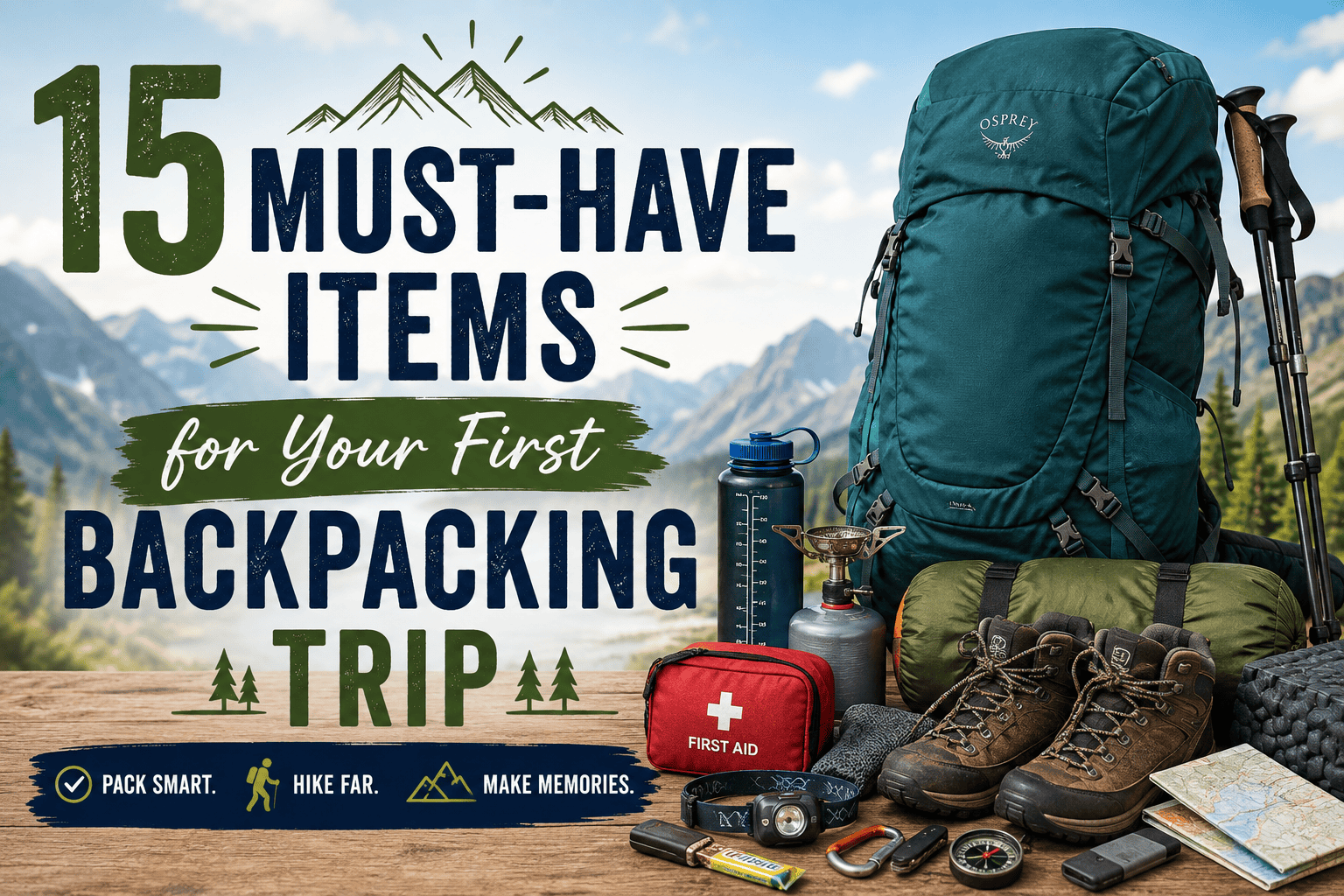
Your first backpacking trip is exciting, and a little intimidating. Walking into an outdoor store or scrolling through gear lists online can make it seem like you need a mountain of expensive equipment before you can even leave the house. You don’t. A good first trip comes down to a handful of essentials that keep you safe, warm, fed, and comfortable, plus the knowledge to use them well.
Here are 15 must-have items for your first backpacking adventure, and what to look for in each.
The Big Three: Carry, Shelter, Sleep
These three items make up most of your pack weight and most of your comfort, so they’re worth the most thought.
1. A Properly Fitted Backpack
Your pack is your home on your back, and fit matters more than features. For a weekend trip, a pack in the 40 to 65 liter range is typically enough. Visit an outdoor retailer and ask to be measured for torso length, then load the pack with weight to test it. A good pack should transfer most of the load to your hips, not your shoulders. Many shops will also let you rent one before you commit.
2. A Lightweight Tent or Shelter
Your shelter protects you from wind, rain, and bugs. A freestanding two-person backpacking tent is a great beginner choice because it’s easy to pitch and gives you some extra room for gear. Look for a total weight under about 2 kilograms (4 to 5 pounds) per two people, a rainfly that covers the whole tent, and good ventilation to reduce condensation. Practice setting it up at home first so you aren’t fumbling in the dark.
3. A Sleeping Bag Rated for the Conditions
Check the expected overnight lows for your destination and choose a bag rated at or slightly below that temperature. Down bags are lighter and pack smaller, but synthetic bags perform better when damp and are usually cheaper. Either is fine for a first trip. Always store your sleeping bag in a dry bag or waterproof liner inside your pack.
4. A Sleeping Pad
A sleeping pad is easy to overlook, but it does two jobs: it cushions you from the hard ground and insulates you from the cold earth. Look at the pad’s R-value, which measures insulation. An R-value of around 2 to 3 works for warm weather, while 4 and up suits colder conditions. Inflatable pads are comfortable and compact, while closed-cell foam pads are tough and affordable.
Safety and Navigation
5. Navigation Tools
Don’t rely on your phone alone. Carry a paper map of the area and a basic compass, and learn how to use them before you go. Download offline maps to your phone as a backup, and pair them with a GPS app. Tell someone your route and expected return time before you leave.
6. A First Aid Kit
A compact kit should include adhesive bandages, gauze, medical tape, antiseptic wipes, blister treatment, pain relievers, antihistamines, tweezers, and any personal medications. Blister care, such as moleskin or blister plasters, is especially valuable on a first trip because new hikers often get hot spots. Take a basic first aid course if you can.
7. A Headlamp With Extra Batteries
A headlamp keeps your hands free for cooking, setting up camp, or finding the toilet at night. Choose one with a red-light mode, which preserves your night vision and is gentler on your campmates. Pack spare batteries or a power bank to recharge it.
8. Fire Starters and Emergency Essentials
Carry waterproof matches or a reliable lighter, plus a backup such as a ferro rod. Add a whistle, a space blanket, and a small multi-tool or knife. Keep in mind that campfire rules vary widely by location and season, so check local regulations before you plan to light one.
9. Sun Protection
Sunscreen, sunglasses, a brimmed hat, and lip balm with SPF are essential, especially at higher elevations where UV exposure is stronger. Even on cloudy days, sunburn can ruin a trip.
Food and Water
10. A Water Filter or Purification System
Never assume natural water sources are safe to drink, even if they look clear. A squeeze filter, pump filter, or gravity system removes bacteria and protozoa, while chemical tablets are a lightweight backup. Pair your system with at least two liters of carrying capacity, such as reusable bottles or a collapsible reservoir, and learn where reliable water sources are along your route.
11. A Lightweight Stove and Cookware
A small canister stove is simple, fast, and ideal for beginners. Bring a pot that fits the stove and holds enough for your group, along with a long-handled spoon and a lightweight mug. Make sure you pack the right type of fuel canister and bring more than you think you’ll need, especially for colder trips.
12. Easy, Calorie-Dense Food
Plan meals that are lightweight, quick to prepare, and high in energy. Think instant oatmeal, tortillas with peanut butter, dehydrated meals, trail mix, nut butters, jerky, and energy bars. As a rough guide, plan for 2,500 to 3,500 calories per day, and pack a little extra in case your trip runs longer than expected. Store food properly, using a bear canister, hanging system, or locked storage as required in your area, to protect both wildlife and your supplies.
Clothing and Footwear
13. Broken-In Footwear and Good Socks
Your feet carry you through every mile, so don’t compromise. Whether you prefer hiking boots or trail runners, choose a pair that fits well and break them in on shorter hikes before your trip. Pair them with moisture-wicking merino wool or synthetic socks, and pack an extra pair. Avoid cotton socks, which hold moisture and cause blisters.
14. A Layered Clothing System
Weather in the backcountry can change quickly, so dress in layers you can add or remove. A basic system includes a moisture-wicking base layer, an insulating mid-layer like a fleece or puffy jacket, and a waterproof, breathable rain shell. Pack a warm hat and lightweight gloves, even in summer. The golden rule is to avoid cotton, which loses its insulation when wet and dries slowly.
The Often-Forgotten Essentials
15. Trowel, Trash Bags, and Hygiene Basics
Leave No Trace principles apply to every trip. Bring a small trowel to dig a cat hole at least 60 meters (200 feet) from water, camp, and trails, along with toilet paper and a sealable bag to pack it out where required. Carry trash bags to haul out everything you bring in, and add hand sanitizer, a small towel, and a toothbrush. Biodegradable soap should be used well away from water sources.
Beginner Tips to Get It Right
- Start small. Choose a short, well-marked trail of one or two nights, close to home and with reliable access to water.
- Weigh your pack. As a general rule, aim to carry no more than 20 percent of your body weight, and less if you can.
- Test everything at home. Set up your tent, light your stove, and try your filter in the backyard so there are no surprises on the trail.
- Check the weather and regulations. Look up forecasts, permits, fire restrictions, and wildlife guidance before you go.
- Don’t buy everything new. Borrow, rent, or buy used gear to keep costs down while you learn what you actually need.
- Pack it in, pack it out. Leave your campsite cleaner than you found it.
Final Thoughts
Your first backpacking trip doesn’t need to be perfect. It needs to be safe, enjoyable, and a good learning experience. With these 15 essentials in your pack and a little preparation, you’ll be well equipped to handle the trail, and you’ll quickly figure out what to add, upgrade, or leave behind next time. Pack smart, start small, and enjoy the quiet magic of sleeping under the stars.