
Best Hiking Boots for Women in 2026: The Complete Buyer’s Guide
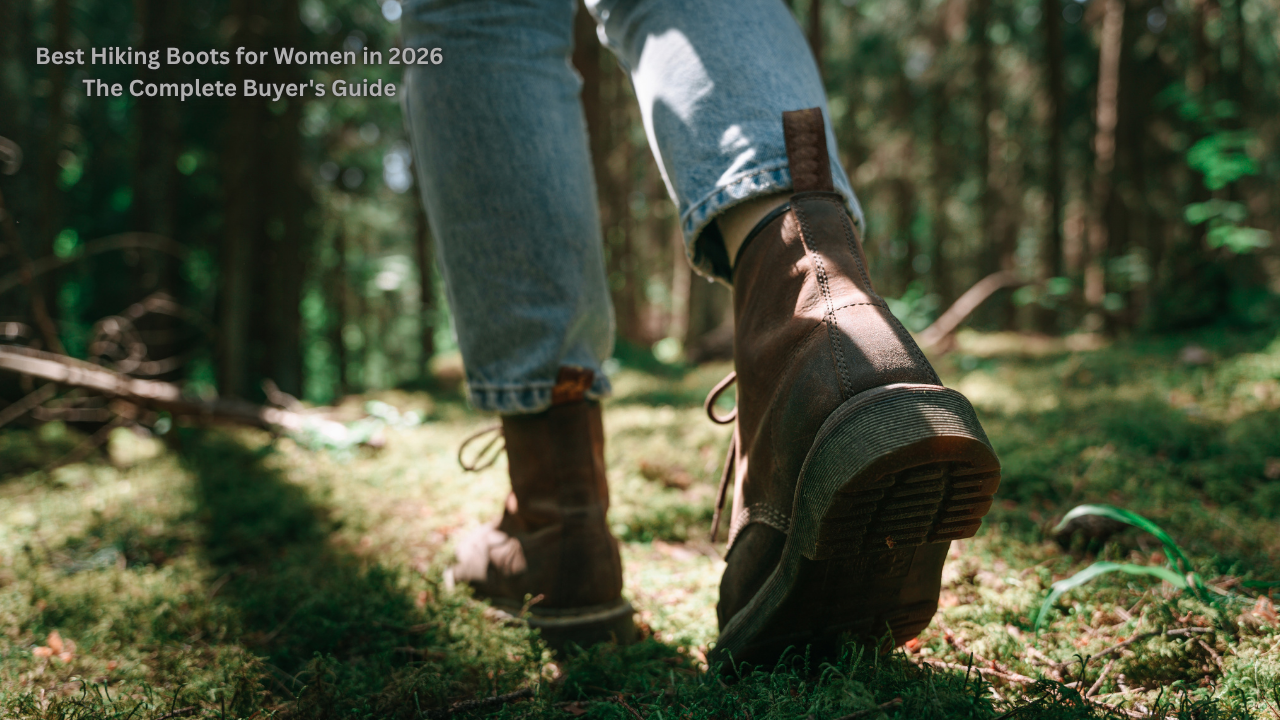
Finding the right hiking boot can completely transform your experience on the trail. The right pair means confident footing on technical terrain, dry feet through stream crossings, no blisters after 10 miles, and the kind of ankle support that lets you push further without worry. The wrong pair means painful hot spots, soaked socks, twisted ankles, and trails cut short.
Women’s hiking boots have come a long way. In 2026, the best options are specifically designed for the female foot — narrower heel, wider toe box, and appropriate last geometry — rather than simply being smaller versions of men’s boots. The performance, materials, and technology available at every price point are genuinely impressive.
This complete guide covers the best hiking boots for women in 2026 — reviewed honestly, compared clearly, and matched to specific trail types, budgets, and hiking styles.
What Makes a Great Women’s Hiking Boot?
Fit above everything: The single most important factor in any hiking boot. A technically superior boot that does not fit your foot will fail you on trail. Women’s-specific lasts (the foot-shaped form the boot is built on) account for the biomechanical differences in women’s feet — narrower heel, different arch position, and slightly different overall geometry.
Support level:
- Low-cut trail runners/shoes: For light day hiking on groomed trails. Maximum comfort and breathability, minimal ankle support.
- Mid-cut boots: The most versatile option. Moderate ankle support, good for most day hikes and light backpacking.
- High-cut boots: Maximum ankle support for technical terrain, heavy loads, and multi-day backpacking.
Waterproofing:
- Waterproof membrane (Gore-Tex or similar): Keeps feet dry in wet conditions but reduces breathability. Essential for wet climates, stream crossings, and shoulder-season hiking.
- Non-waterproof: More breathable, dries faster when wet, better for hot climates and dry trails.
Outsole and traction: Vibram outsoles are the gold standard — providing excellent grip on wet rock, loose terrain, and technical surfaces. Lug depth and pattern determine grip on specific terrain types.
Weight: Lighter boots reduce fatigue on long days. The trade-off is often durability and support. Match boot weight to your typical hiking style.
Break-in period: High-quality leather boots require significant break-in. Synthetic and mesh boots break in faster but may not mold to the foot as precisely over time.
Best Hiking Boots for Women in 2026
1. Salomon X Ultra 4 Mid GTX Women’s — Best Overall
The Salomon X Ultra 4 Mid GTX is consistently rated the best all-around women’s hiking boot — and in 2026 it remains the standard against which all others are measured. It combines exceptional trail performance, genuine waterproofing, precise fit, and durability that justifies the investment.
Key features:
- Gore-Tex waterproof membrane for all-day dry feet
- Advanced Chassis technology: TPU frame between the midsole and outsole for torsional rigidity and energy transfer
- Contagrip outsole with aggressive multidirectional lugs for grip on all terrain types
- SensiFit construction: the lacing system wraps the foot precisely from the outsole to the collar
- OrthoLite footbed for cushioning and moisture management
- Quicklace system for fast, precise adjustment
- Women’s-specific last for a precise fit
Why women love it:
The SensiFit construction is what distinguishes Salomon from most competitors — the lacing cradles the entire foot rather than just clamping across the top, creating a glove-like fit that eliminates the heel slippage and hot spots that plague so many hikers.
The Advanced Chassis technology provides meaningful torsional stability on technical terrain without making the boot feel rigid or heavy. It is the ideal middle ground between a trail runner and a traditional stiff hiking boot.
The Quicklace system — a single-pull bungee lace with a locking mechanism — provides precise tension adjustment without the faff of traditional laces. Perfect for mid-hike adjustments on the trail.
What it lacks:
- Less suitable for very heavy backpacking loads (consider a stiffer boot for 25kg+ packs)
- Narrower fit may not suit women with wider feet
Best for: Day hikers, weekend backpackers, and anyone who wants the best general-purpose women’s hiking boot available.
2. Merrell Moab 3 Mid Waterproof Women’s — Best Value
Price: $135–$155 Weight: 454g per boot Waterproof: Yes (M-Select DRY) Cut: Mid Best for: Beginner to intermediate hikers, value seekers
The Merrell Moab series has been one of the best-selling hiking boots in the world for over a decade — and for good reason. The Moab 3 continues the tradition of delivering reliable performance, genuine waterproofing, and exceptional comfort at an accessible price point.
Key features:
- M-Select DRY waterproof membrane (Merrell’s proprietary system)
- Vibram TC5+ outsole for reliable grip on most terrain types
- Air Cushion in the heel absorbs shock and provides stability
- Kinetic Fit BASE insole for anatomical support
- Bellows tongue prevents debris entry
- 100% recycled laces and 50% recycled mesh lining (sustainability focus)
- Women’s-specific last
Why value-seeking hikers love it:
At $135–$155, the Moab 3 is the most affordable genuinely capable hiking boot on this list. It handles most day hiking scenarios — groomed trails, moderate terrain, wet conditions — with reliable performance that does not embarrass itself compared to more expensive alternatives.
The Air Cushion heel is distinctive — providing a comfortable, slightly cushioned feel that makes the Moab 3 particularly popular with hikers who are on their feet for long days.
The wide availability in different widths (standard and wide) makes the Moab 3 accessible to women whose feet do not fit standard hiking boot lasts.
What it lacks:
- Less precise fit and performance than Salomon X Ultra 4 on technical terrain
- Heavier than some competitors at this price point
- Less torsional rigidity for heavy pack carrying
Best for: Beginner hikers, casual day hikers, and anyone who wants reliable performance at the most accessible price point.
3. Hoka Anacapa 2 Mid GTX Women’s — Best for Comfort and Cushioning
Price: $195–$220 Weight: 390g per boot Waterproof: Yes (Gore-Tex) Cut: Mid Best for: Hikers who prioritise comfort, longer days on trail
Hoka brought its running shoe cushioning philosophy to hiking boots — and the result, the Anacapa 2, is the most comfortable hiking boot available. The maximalist midsole provides extraordinary cushioning that makes long days on trail significantly less fatiguing.
Key features:
- Gore-Tex waterproof membrane
- Hoka’s signature maximalist midsole — significantly more cushioned than traditional hiking boots
- RMAT midsole compound for responsive yet plush cushioning
- Vibram Megagrip outsole — excellent traction on wet and dry surfaces
- Wider toe box than traditional hiking boots
- Early stage Meta-Rocker for smooth heel-to-toe transition
- Extremely light for a waterproof mid-cut boot (390g)
Why comfort-focused hikers love it:
The cushioning is extraordinary — noticeably more than any other hiking boot on this list. For hikers with knee issues, joint pain, or anyone who finds long days on trail hard on their body, the Anacapa’s midsole provides meaningful relief.
The wider toe box suits women whose feet do not fit the narrower lasts of traditional hiking brands — toes splay naturally rather than being compressed.
At 390g per boot, the Anacapa 2 is the lightest boot on this list — the maximalist cushioning feels counterintuitively light because Hoka’s foam is both thick and lightweight.
What it lacks:
- Less torsional rigidity than more traditional hiking boots — less suitable for very technical terrain with heavy loads
- The maximalist platform feels unstable to some hikers on highly uneven terrain
4. Keen Targhee III Mid Waterproof Women’s — Best for Wide Feet
KEEN has built its reputation on footwear with a wider, roomier fit — and the Targhee III is the best hiking boot for women with wide feet or those who simply want more toe room than traditional hiking boots provide.
Key features:
- KEEN.DRY waterproof breathable membrane
- KEEN’s proprietary outsole with multidirectional lugs
- ESS shank for torsional rigidity and stability
- KEEN Dry membrane for waterproofing
- Wider toe box as standard (KEEN’s signature fit feature)
- Metatomical dual-density EVA footbed for arch support
- Available in regular and wide widths
Why wide-footed hikers love it:
KEEN’s wider toe box is genuinely distinctive — it allows the toes to splay naturally rather than being compressed, which reduces blisters, hotspots, and the foot fatigue that comes from toes fighting against a narrow boot.
For hikers whose feet do not fit in Salomon or Merrell comfortably, the Targhee III is often the solution that finally feels right from the first wear.
The KEEN.DRY membrane performs well in moderate wet conditions — adequate for most day hiking scenarios.
What it lacks:
- Less technically capable outsole than Vibram alternatives
- Heavier than some competitors
- Not ideal for very technical or steep terrain
Best for: Women with wide or standard-wide feet, casual to moderate day hikers, and anyone who has struggled to find hiking boots that fit comfortably.
5. La Sportiva Nucleo High II GTX Women’s — Best for Technical Terrain
Price: $230–$260 Weight: 430g per boot Waterproof: Yes (Gore-Tex Surround) Cut: High Best for: Technical hiking, scrambling, mountaineering approach
La Sportiva is the choice of mountaineers, technical hikers, and anyone tackling genuinely demanding terrain. The Nucleo High II GTX is the brand’s most versatile technical hiking boot — bringing genuine alpine performance to trail hiking.
Key features:
- Gore-Tex Surround waterproofing — 360-degree breathability including through the outsole
- Vibram Megagrip outsole with aggressive lug pattern for technical terrain
- TPU heel and toe cap for durability and impact protection
- Precise lacing system with toe box and upper lacing zones
- FriXion XF rubber compound for exceptional grip on rock
- High-cut design for maximum ankle support on technical terrain
- Stiff torsional platform for precision footwork
Why technical hikers love it:
La Sportiva’s FriXion rubber compound on technical rock is genuinely outstanding — providing grip that feels sticky even on smooth wet rock. For hikers who tackle scrambles, talus fields, and rocky ridgelines, this difference is meaningful and safety-relevant.
The Gore-Tex Surround technology breathes through the outsole as well as the upper — creating noticeably better internal climate than standard Gore-Tex construction, reducing the sweaty feet common in waterproof boots.
The precise fit and stiff platform provide the proprioceptive feedback that technical terrain demands — you can feel exactly where your foot is placing, enabling precise footwork on challenging ground.
What it lacks:
- Premium price point
- Stiffer platform is less comfortable for casual trail hiking
- Significant break-in period
Best for: Experienced hikers tackling technical terrain, peak baggers, scramblers, and anyone who wants alpine-quality performance for demanding hikes.
6. Oboz Sawtooth X Mid B-DRY Women’s — Best Sustainability-Focused Boot
Price: $145–$165 Weight: 425g per boot Waterproof: Yes (B-DRY) Cut: Mid Best for: Eco-conscious hikers, moderate terrain
Oboz is an independent brand with a genuine sustainability commitment — planting a tree for every pair of shoes sold (over 3 million trees planted) and using recycled and responsibly-sourced materials throughout production. The Sawtooth X delivers solid performance alongside genuine environmental credentials.
Key features:
- B-DRY waterproof breathable membrane
- Oboz BFit anatomical insole — one of the best stock insoles in hiking footwear
- Sawtooth outsole with durable multi-directional lugs
- TPU stability frame for torsional rigidity
- Nubuck leather and mesh upper
- Available in regular and wide widths
- Tree planted with every purchase
Why eco-conscious hikers love it:
The BFit insole is Oboz’s secret weapon — a genuine anatomical fit that supports the arch, heel, and forefoot in a way that most stock insoles cannot match. Many hikers find they do not need to replace the insole (a common upgrade for most hiking boots) because the stock version is already outstanding.
The combination of genuine waterproofing, solid traction, and mid-cut support at a competitive price makes the Sawtooth X a consistently excellent performer on most trail types.
What it lacks:
- B-DRY membrane is less breathable than Gore-Tex alternatives
- Less technically capable than La Sportiva or Salomon on very demanding terrain
Best for: Environmentally conscious hikers, moderate trail hikers, and anyone who prioritises supporting sustainable outdoor brands.
7. Brooks Cascadia 17 Trail Running Shoe — Best Lightweight Option
Price: $130–$150 Weight: 280g per shoe Waterproof: No (non-waterproof standard, GTX version available) Cut: Low Best for: Fast and light hiking, trail running, well-groomed trails
For women who hike fast, prefer minimal footwear, or primarily tackle well-groomed trails — a high-quality trail running shoe like the Brooks Cascadia 17 provides the comfort, grip, and protection needed without the weight of a traditional hiking boot.
Key features:
- TrailTack rubber outsole for exceptional grip on wet and loose surfaces
- DNA LOFT v2 midsole for cushioning and energy return
- Rock plate in the forefoot for underfoot protection
- Breathable mesh upper
- Secure wrap lacing system
- 280g — the lightest option on this list by a significant margin
Why fast hikers love it:
The weight difference between a trail running shoe and a mid-cut hiking boot is significant on a long day — 280g vs 450g per shoe means 340g less per foot, which compounds over thousands of steps to meaningful fatigue reduction.
For hikers on well-groomed trails, the Brooks Cascadia provides adequate protection and grip without the stiffness, weight, and ankle height of traditional hiking boots.
What it lacks:
- No ankle support (low-cut)
- Standard version not waterproof
- Less protection on rough, rocky, or very technical terrain
- Not suitable for heavy backpacking loads
Best for: Day hikers on well-maintained trails, fast packers, trail runners who also hike, ultralight backpackers.
Women’s Hiking Boot Comparison Table
| Boot | Price | Weight | Waterproof | Cut | Best For |
|---|---|---|---|---|---|
| Salomon X Ultra 4 Mid GTX | $185–$210 | 440g | Gore-Tex | Mid | Best overall |
| Merrell Moab 3 Mid WP | $135–$155 | 454g | M-Select DRY | Mid | Best value |
| Hoka Anacapa 2 Mid GTX | $195–$220 | 390g | Gore-Tex | Mid | Best cushioning |
| Keen Targhee III Mid WP | $160–$185 | 454g | KEEN.DRY | Mid | Best for wide feet |
| La Sportiva Nucleo High II | $230–$260 | 430g | Gore-Tex Surround | High | Best technical |
| Oboz Sawtooth X Mid | $145–$165 | 425g | B-DRY | Mid | Best eco option |
| Brooks Cascadia 17 | $130–$150 | 280g | No (GTX option) | Low | Best lightweight |
Which Hiking Boot Should You Choose?
Choose the Salomon X Ultra 4 Mid GTX if: You want the best all-around performance for most hiking scenarios. The SensiFit construction, Gore-Tex waterproofing, and Contagrip outsole handle the vast majority of trails with excellence.
Choose the Merrell Moab 3 Mid Waterproof if: Budget is a primary consideration but you do not want to compromise significantly on performance. The best value-for-money hiking boot on this list.
Choose the Hoka Anacapa 2 Mid GTX if: Comfort is your top priority — knee or joint issues, very long days, or simply a preference for maximalist cushioning make the Anacapa the right choice.
Choose the Keen Targhee III Mid if: You have wide feet or struggle to find hiking boots that fit comfortably. KEEN’s wider last is genuinely distinctive and transformative for wide-footed hikers.
Choose the La Sportiva Nucleo High II if: You tackle technical terrain — scrambles, talus fields, mountain hiking — where the grip, support, and precision of a technical boot makes a meaningful safety difference.
Choose the Oboz Sawtooth X Mid if: Environmental credentials matter to your purchasing decision, and you want a solid, honest performer on moderate terrain.
Choose the Brooks Cascadia 17 if: You prioritise light weight and speed over maximum ankle support and waterproofing — trail running, fast hiking, and groomed trail day hikes.
How to Get the Perfect Fit: Essential Tips
Shop in the afternoon: Feet swell throughout the day — trying boots in the afternoon ensures your hiking fit accommodates natural swelling.
Wear your hiking socks: Always try hiking boots with the specific socks you intend to hike in. Sock thickness significantly affects fit.
The thumbnail test: With the boot laced and your foot pushed forward, you should have approximately one thumbnail’s width (1–1.5cm) of space behind your heel. This prevents your toes from jamming the front on descents.
Walk on an incline: Most outdoor retailers have small incline boards for exactly this purpose. Walking downhill in the boot reveals heel lift and toe jamming — the most common fit problems.
Take your time: Your feet will tell you if a boot fits within 10–15 minutes of walking. Pressure points, heel slippage, or toe discomfort apparent in the store will be significantly worse after 5 miles on trail.
Consider your foot volume: Beyond length and width, some feet are high-volume (thick) and some are low-volume (flat). Higher-volume feet fit better in KEEN and Hoka. Lower-volume feet fit better in La Sportiva and Salomon.
Breaking In Your Hiking Boots
Start gradually:
- Week 1–2: Wear around the house for 1–2 hours daily
- Week 3–4: Short walks of 30–60 minutes on various surfaces
- Week 5–6: Half-day hikes on easy to moderate terrain
- Week 7+: Full day hikes and technical terrain
Address hotspots early: A hotspot on day one of gradual break-in is manageable. The same hotspot ignored through 10 miles on trail becomes a serious blister. Use moleskin or Leukotape to pad problem areas during the break-in process.
Leather takes longer: Full-grain leather boots require a significantly longer break-in than synthetic or mesh alternatives — but mold to the foot more precisely over time.
Essential Hiking Boot Care
Clean after every hike: Remove laces and insoles. Clean the upper with a soft brush and mild soap. Rinse thoroughly. Allow to air dry away from direct heat.
Condition leather boots: Apply a leather conditioner (Nikwax Leather Conditioner or similar) every few months to maintain flexibility and water resistance. Dried leather cracks and fails prematurely.
Re-waterproof regularly: Waterproof membranes remain effective but the DWR (Durable Water Repellency) treatment on the boot’s outer surface needs periodic refreshing. Apply Nikwax TX.Direct or similar spray after every few washes.
Replace insoles: Stock insoles compact and lose support over time. Replacing with a quality aftermarket insole (Superfeet Green, Sole Footbed) significantly extends the supportive life of any hiking boot.
Store correctly: Clean and dry before storage. Store in a cool, dry place away from direct sunlight and extreme temperatures. Never store in a compressed state.
Final Thoughts
The right hiking boot is one you forget about on the trail — because your feet feel comfortable, supported, and secure rather than demanding your attention. Every boot on this list is genuinely capable of providing that experience for the right hiker in the right terrain.
For most women, the Salomon X Ultra 4 Mid GTX is the boot to get — it handles the widest range of scenarios with the most precision. For budget-conscious hikers, the Merrell Moab 3 is the honest, capable choice. For wide feet, KEEN. For cushioning, Hoka. For technical terrain, La Sportiva.
Take the time to find your fit. Break them in properly. Treat them well and they will carry you for thousands of miles.
Find your boot. Hit the trail. The mountain is waiting.