
12 Easy Hiking Tips for Beginners Everything You Need to Know
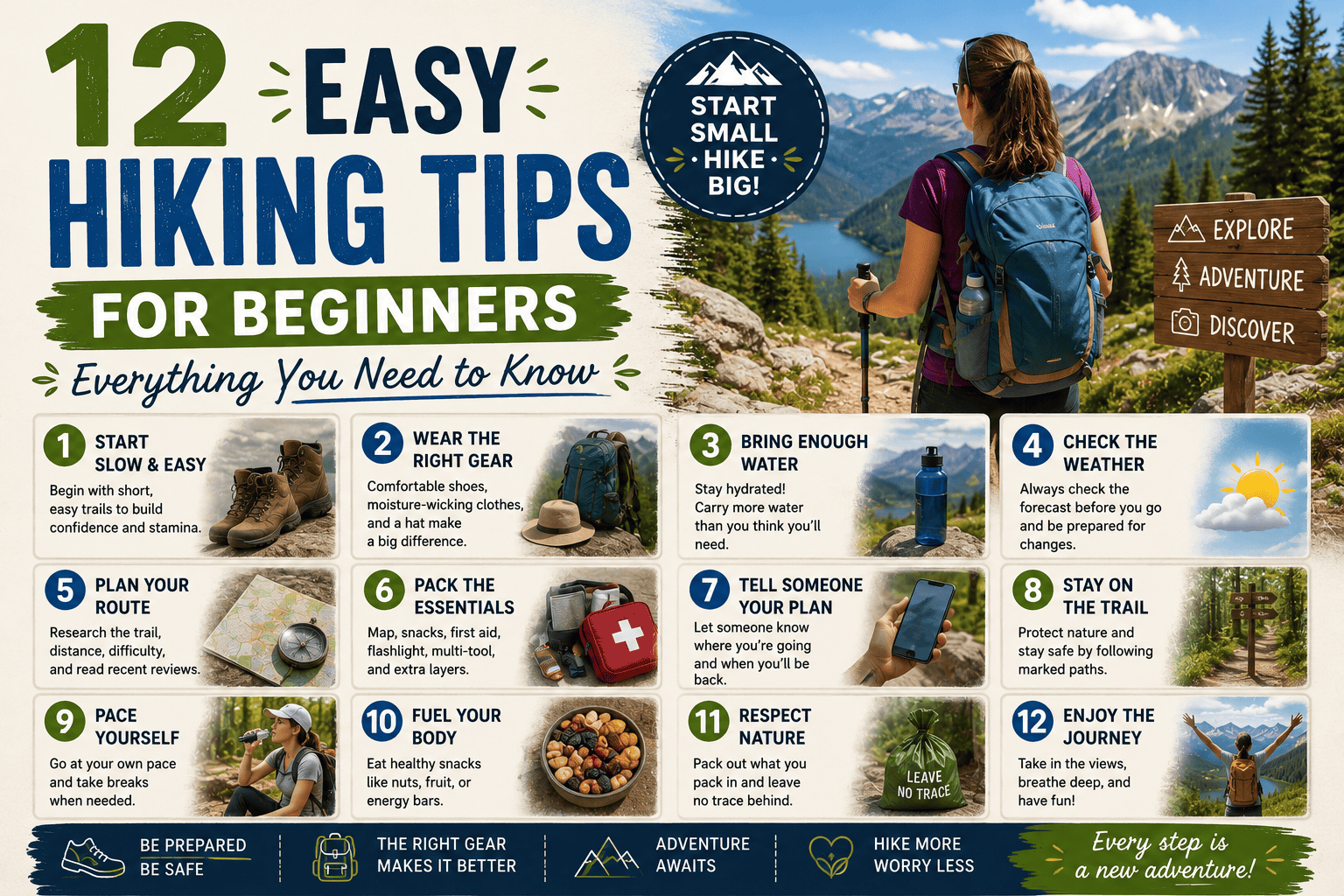
Hiking is one of the simplest and most rewarding ways to get active, clear your mind, and enjoy nature. You don’t need expensive gear or years of experience to begin. With a little preparation and the right mindset, anyone can enjoy a safe and satisfying hike. Here are 12 easy tips to help you get started.
Before You Go
1. Start with Short, Easy Trails
Choose a beginner-friendly route of 3 to 5 kilometres with minimal elevation gain. Look for well-marked paths with good reviews, and build your distance and difficulty gradually as your fitness and confidence improve.
2. Research Your Route
Check the trail length, terrain, difficulty, and estimated time before you set out. Read recent reviews, look at maps, and find out whether the trail is a loop or an out-and-back route. Knowing what to expect prevents unpleasant surprises.
3. Check the Weather
Weather can change quickly, especially in the mountains. Look at the forecast before you leave and avoid hiking during storms, extreme heat, or heavy rain. Be prepared to turn back if conditions worsen.
4. Tell Someone Your Plans
Let a friend or family member know where you’re going and when you expect to return. If possible, hike with a companion. It’s safer and more fun to share the experience.
Gear and Clothing
5. Wear the Right Footwear
Comfortable, well-fitting shoes are the most important piece of gear. Hiking shoes or boots with good grip protect your feet and ankles. Break them in on shorter walks first to avoid blisters, and wear moisture-wicking socks instead of cotton.
6. Dress in Layers
Temperatures can shift during a hike. Wear a moisture-wicking base layer, add a warm mid-layer such as a fleece, and carry a lightweight waterproof jacket. Avoid cotton, which holds sweat and makes you cold. Don’t forget a hat and sunglasses.
7. Pack a Small Daypack
Carry only what you need, but don’t skip the essentials:
- Water
- Snacks
- A basic first-aid kit
- Sunscreen and insect repellent
- A map or offline navigation app
- A torch or headlamp
- A whistle
- A fully charged phone and a small power bank
On the Trail
8. Bring Plenty of Water and Snacks
A common guideline is about half a litre of water per hour of moderate hiking, and more in hot weather. Pack energy-boosting snacks like nuts, dried fruit, energy bars, or sandwiches, and eat small amounts regularly to keep your energy steady.
9. Pace Yourself
Hiking isn’t a race. Start slowly, find a rhythm you can maintain while still holding a conversation, and take short breaks when you need them. Going too fast early on can leave you exhausted halfway through.
10. Stay on the Marked Trail
Sticking to the path keeps you from getting lost, protects fragile plants, and reduces your risk of injury. If you lose the trail, stop, stay calm, and retrace your steps instead of wandering further.
Safety and Respect for Nature
11. Know Basic Safety Rules
Watch your footing on rocks and slippery surfaces, and use trekking poles on steep or uneven ground if you like. Keep a respectful distance from wildlife and never feed animals. Learn the signs of dehydration, heat exhaustion, and fatigue, and rest when needed. Start early so you finish well before dark.
12. Leave No Trace
Take all your rubbish home, including fruit peels and wrappers. Don’t pick plants or disturb wildlife, and keep noise to a minimum so others can enjoy the peace. The goal is to leave the trail exactly as you found it, or better.
Quick Beginner Checklist
- Trail chosen and checked
- Weather forecast reviewed
- Someone told your plans
- Comfortable shoes and layered clothing
- Water, snacks, and first-aid kit packed
- Phone charged and map downloaded
- Sunscreen, hat, and rubbish bag included
Final Thoughts
Hiking is all about enjoying the journey, not conquering the toughest peak on day one. Start small, prepare well, listen to your body, and respect the environment. With each outing, you’ll gain strength, confidence, and a deeper appreciation for the outdoors. Lace up your shoes, grab your daypack, and take that first step.
Note: If you have a medical condition or are unsure about your fitness level, speak with a doctor before starting a new physical activity.