
15 Best Hiking Gear Essentials for Beginners
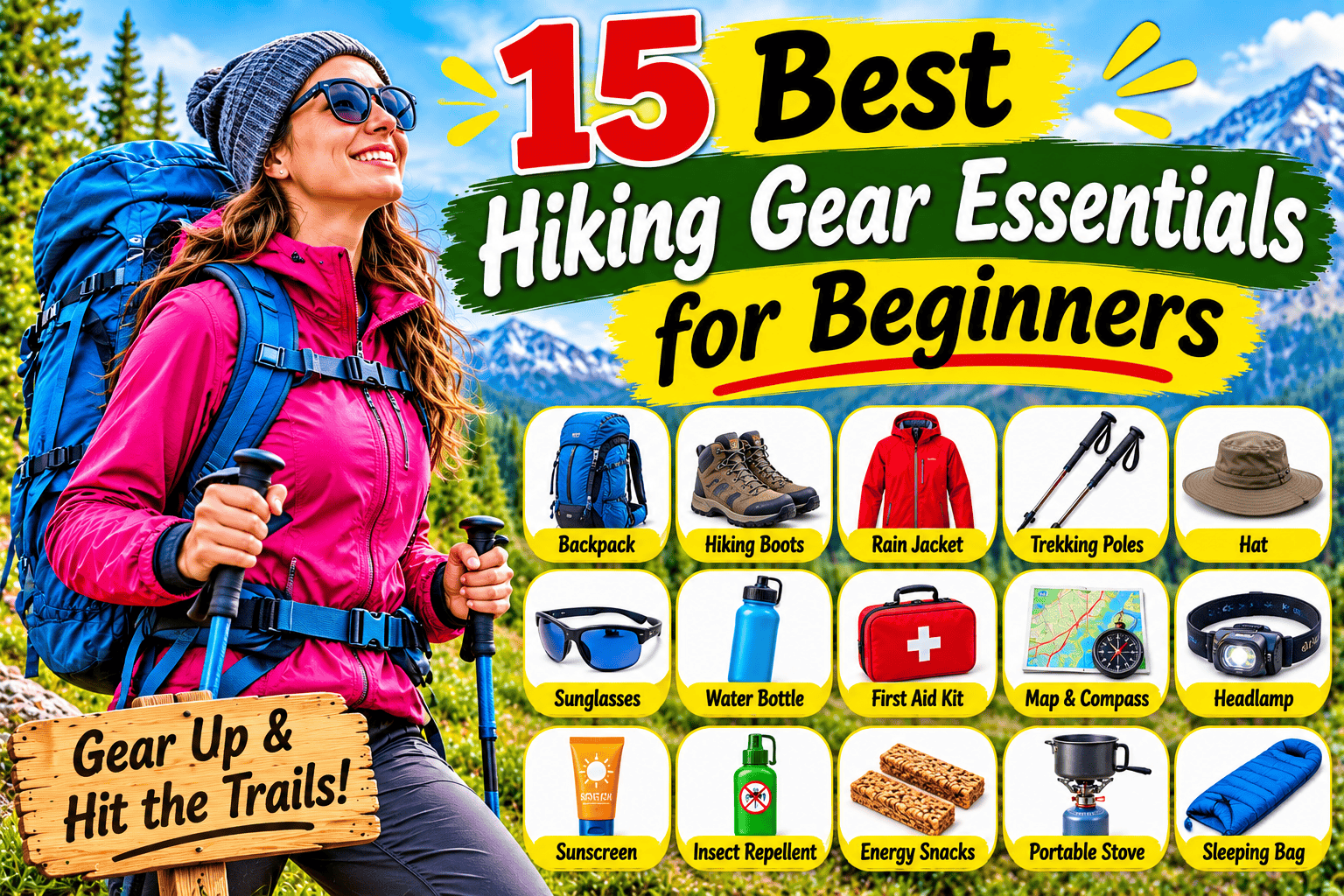
Your first hikes don’t call for expensive kit, but they do call for the right kit. Blisters, getting soaked and running out of water are the three things that most often turn a beginner’s day out into a miserable one, and each has a simple fix.
The 15 essentials below are ordered by how you use them: what you wear, what you carry to drink and eat, and what keeps you safe if plans change. Buy the first few carefully, borrow or rent the rest while you find your feet, and upgrade only once you know what you actually use.
What you wear and carry
1. Hiking boots or trail shoes
Footwear is the one place not to cut corners. Boots give ankle support and protection on rough or rocky ground, while trail shoes are lighter and suit well-formed paths. Try them on in the afternoon, when feet are slightly swollen, wearing your hiking socks, and leave a thumb’s width of space at the toe.
2. Moisture-wicking hiking socks
Cotton holds sweat against the skin and causes blisters. Merino wool or synthetic socks pull moisture away and cushion the foot. Carry a spare pair for longer walks and change into them at lunch.
3. Layered clothing
Temperatures shift quickly on a trail, so dress in layers you can add or remove: a wicking base layer, a warm mid-layer such as fleece, and an outer shell. Avoid cotton jeans and T-shirts, which stay damp and chill you when you stop.
4. Waterproof rain jacket
A lightweight waterproof, breathable jacket is useful in a sudden shower and doubles as a windbreaker. Look for a hood that fits over a cap and zips under the arms for ventilation.
5. Daypack of 15 to 25 litres
A daypack carries everything else on this list. Choose one with padded shoulder straps, a hip belt that moves weight onto your hips, and a chest strap for stability. Adjust it so the load sits close to your back, not swinging below it.
Food, water and staying found
6. Reusable water bottle or hydration bladder
Dehydration brings headaches and fatigue long before you feel thirsty. A common rule of thumb is about half a litre per hour of moderate hiking, more in heat. A bladder with a drinking tube lets you sip without stopping, while a sturdy bottle is simpler to clean and refill.
7. Water filter or purification tablets
On longer routes, a small filter or a pack of purification tablets lets you refill from streams safely. It also acts as insurance if you drink more than planned.
8. Trail snacks
Pack more food than you think you need: nuts, dried fruit, energy bars and something salty. Eating small amounts regularly keeps energy steady and avoids the sudden slump that comes with skipping lunch.
9. Map and compass, plus offline navigation
Phone batteries die and signal disappears. Carry a paper map and a basic compass, and learn to use them on an easy route first. Download offline maps to your phone as an extra layer, and keep it on flight mode to save battery.
10. Headlamp with spare batteries
Days run longer than planned, and a late finish in the dark is much safer with a light that leaves your hands free. Even on a morning hike, a small headlamp weighs very little and earns its place.
Safety and comfort
11. First-aid kit
A small kit covers the usual trail problems: plasters and blister dressings, antiseptic wipes, bandages, tape, pain relief and any personal medication. Check it before each season and learn what each item is for.
12. Sun protection
Sunburn builds up quietly at altitude and in open country. Wear a wide-brimmed hat and sunglasses, and apply broad-spectrum sunscreen with a high SPF before you start and again during the day.
13. Trekking poles
Poles reduce the load on your knees on steep descents and help with balance on loose ground and stream crossings. They are optional on easy trails but worth trying once your routes get hillier.
14. Whistle and emergency blanket
A whistle carries much further than your voice, and three blasts is the widely used distress signal. A foil emergency blanket weighs next to nothing and helps retain body heat if you are stuck or injured.
15. Multi-tool or small knife
For cutting tape, trimming a loose strap or opening food, a compact multi-tool is handy and light. Keep it in an easy-to-reach pocket of your pack.
Where to start
If the budget is tight, put your money into boots or shoes, socks, a rain jacket and a daypack, then add the rest over time. Everything else can be borrowed, rented or bought second-hand while you work out your preferences.
Before any hike, check the weather, tell someone your route and return time, and pack your bag the night before. Start with short, well-marked trails and build up. The best gear is the kit you have tested and trust.